-
About -
Admissions & Academics -
Research & Engagement -
Departments & Faculty -
Current Students
Faculty Research Sites

Center for the Study of Reading
The Center for the Study of Reading has undertaken numerous research and development projects that aim to build new knowledge about reading and the practice of reading instruction.
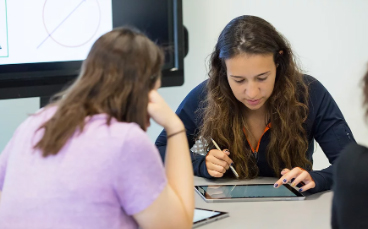
Collaborative Learning Lab (CoLearnLab)
The Collaborative Learning Lab focuses on research using device ecologies in classrooms, with much of it centered around interactive surfaces and multi-touch technology.
Cromley Lab
The Cromley Lab investigates how cognition and motivation work separately and together to help students learn about, achieve in, and remain committed to Science, Technology, Mathematics, and Engineering (STEM) education.
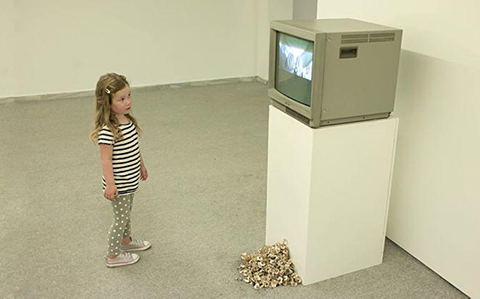
CyberSocial Learning Library
Bill Cope and Mary Kalantzis' learning design and research laboratory focuses on designing and researching learning environments that establish a dialogue between artificial and human intelligence.
Early Childhood Asset Map
IECAM's provides comprehensive early childhood data and maps to policy makers, legislators, admins, grant writers, educators, early childhood advocates, and researchers to improve outcomes for Illinois children.

Early Intervention Clearinghouse
The Illinois Early Intervention (IE) Clearinghouse is here to serve as your resource for information on parenting, child development, early childhood education, early intervention, and helping children with special needs.
EdPsych Psycholinguistics Lab
The Edu Psychology Psycholinguistics Lab is a branch of the Biological Intelligence (BioIntel) research theme within the Cognitive Science research group. Principle Investigator: Dr. Kiel Christianson

Educational Theory
Educational Theory is a bimonthly publication owned and produced by the University of Illinois, created to foster the continuing development of educational theory and to encourage wide and effective discussion of theoretical problems within education.
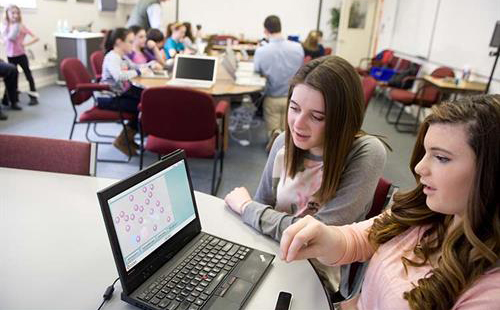
Embodied and Immersive Technology (EmIT) Group
The EMIT Group aims to explore the potential of emerging technologies–particularly those that allow for physical and embodied interactions-for generating powerful learning experiences.
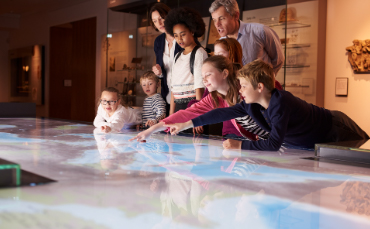
FIELD Trip Lab
Fostering Inquiry and Equity in Learning Design (FIELD) partners with formal and informal spaces to research, design, and scaffold learning environments for families, students, and school groups.
Human-centered Educational Data Science Lab
The Human-centered Educational Data Science Lab investigates the importance of human insights when designing and utilizing data-driven models of student behaviors.
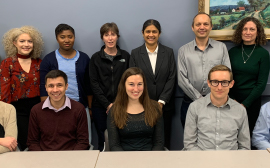
iLearn
The iLearn Group consists of a diverse interdisciplinary team committed to fundamentally understanding learner behavior in online courses and transforming learner experience.
Illinois Early Learning Project
The Illinois Early Learning Project is a source of evidence-based reliable information on early care and education for families, caregivers, and teachers of young children in Illinois.
Immersive Data Lab
Immersive Data Lab's work centers on three interrelated areas: data science, data-driven design, and STEM education.
Impact on Science Education
Impact on Science Education is a group of collaborators that innovate science education through teacher education, instructional design, and research.

Interdisciplinary Implementation Laboratory
The ILL creates and tests collaborative, diverse, and sustainable implementation processes, models, and scaffolds. This allows the laboratory to manage the impact of innovation through implementation.
Jessica Hardy Lab
The Jessica Hardy Lab develops apps, coaching strategies, models, and methods to assist with supporting the education and social-emotional wellbeing of young children and their families.
Learning-in-Context Research Group
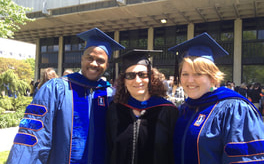
The Learning-in-Context Research Group is directed by Professor Michelle Perry and understands the contexts and processes that support successful learning in STEM content.

Liberation Lab
The Liberation Lab investigates the ways in which race and racism are constructed, the impact of racism on the lived experience of BIPOC in the US and globally, and how BIPOC people heal and reach liberation.
Pixel Playgrounds
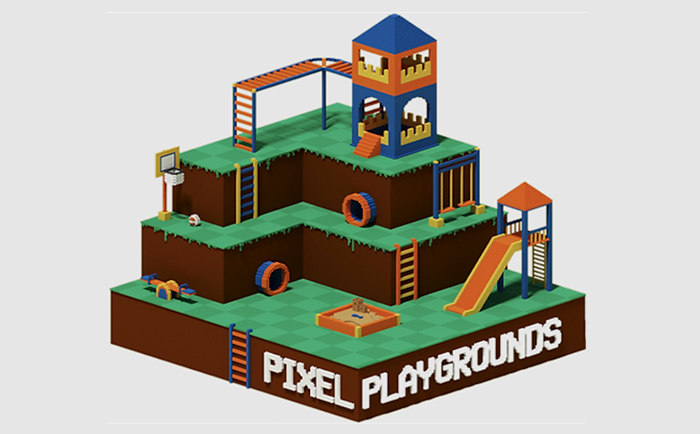
Pixel Playgrounds is a research lab that focuses on the intersection of physical spaces, information, technology, ad people to support collaborative learning.
Theory-Based Computational Analysis of Classroom Audiovisual Data
Focuses on methodologies that combine grounded theory based approaches with computational analyses of classroom video data.

What-If Hypothetical Implementations in Minecraft
WHIMC is dedicated to cutting-edge and impactful information learning. The team develops computer simulations that engage, excite, and generate interest and engagement in STEM.
Explore:
Connect:
- General: 217-333-0960
- Graduate (GSSO): 217-244-3542
- Undergraduate (SAAO): 217-333-2800
- Online Programs: 217-244-3542
- School and
Community Experiences: 217-333-2561 - Office of the Dean: 217-333-0960
- Office of Advancement: 217-244-7228
- Bureau of Educational
Research: 217-333-3023 - IT Partners: 217-244-7005
- Marketing: 217-333-0960
- Facilities: 217-244-7005
Apply to the College
Congratulations! You've taken the first step to becoming a student of the College of Education. The application process is different for undergraduate and graduate studies.
Send Our Office a Message
Thanks -- we will get back to you in 24 hours.